Showing posts with label dining etiquette. Show all posts

Reader Request: What's Mine is His?

Sunday, September 19, 2010

A few weeks ago, the Manners Monday series was focused on Table Etiquette and Manners as it pertains to dining in, dining out, and the sometimes uncomfortable interview over lunch.

After one particular post on table etiquette not only did I receive a few comments and some e-mails from all of you about the topic of 'food stealers' and sharing food, I also received a reader request in my inbox. I've been asked to keep her name anonymous. Our e-mail conversation is below:

Hi Karla,


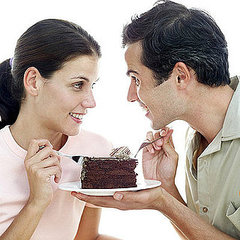
At casual family dinners, my husband thinks it is okay to reach out and grab a piece of my food from my plate before he asks, and he does so with his fingers. I don't mind him having the food, but I think it is very rude to "pick" food from a person's plate then asking if it is okay that they have it after the fact.

I think if someone wants to try a portion of food from another's plate they should ask permission (even if it is a spouse) and then use a utensil, not their hands. My husband says I'm selfish and snooty for being that way. I say that is not the case. What do you think?

~Anonymous


Hi Anonymous,

Thanks for writing in! :) A few of my readers mentioned in the comments section that their husbands do the same thing, so you are not alone. You are completely correct for feeling that it's rude of him to have taken food from your plate without asking first, especially with his fingers. This is definitely poor manners.

If something is on our own plate it belongs to us, if it is on another person's plate, it belongs to them. Whether in a high end restaurant or in McDonald's, good manners always require asking first, even if it's only ONE french fry off of their plate. Close family members aren't exempt from the need to ask, in fact it is by asking first that we show our respect for one another and simultaneously teach our children what is considered polite, as they mimic the behavior they see.

When the other person agrees to share, you should typically let them portion out what they want to give you on a separate small plate or in a casual setting, transfer the food to your plate with their utensil. If they invite you to take what you like, be sure to use utensils, not fingers.

You are not being snooty or selfish in any way at all. In fact, I find it humorous how many times classy women and those that are polite get labeled as snooty. I received a reader request several  months ago on that very topic which you might be interested to read, it's titled 'Classy or Snooty?.

She then replied:

Dear Karla,


I very much appreciate you responding to my question about table manners and reaffirming my belief about what is considered "proper". Thank You! It really helps to hear another person's perspective on a topic that is still important in today's society, but many have become complacent about. You have been so helpful!


Thanks Again!


Sincerely,
~Anonymous 

Do you have family or friends that feel it's okay to steal your food or pick from your plate? How do you handle it? I'd love to hear from you!

I hope you all are having a fabulous weekend!

Manners Monday: Mixing Business with Dining

Monday, August 16, 2010

Last week's Manners Monday post was all about proper table settings with Part 1 of this three-part series offering tips for everyday table etiquette. For the final installment of the series, today we'll be discussing what to do when mixing business with dining.

Now, I realize that not all of you are wining and dining clients everyday or have power lunches on the agenda, but I think it is an important aspect of dining that everyone should review. You never know when your blog might suddenly take off and you might be invited to meet someone lovely about a big opportunity. Perhaps you're job hunting (as many are right now) and an interested company wants to meet with you over lunch. That is precisely the time that some will begin to panic.

Several years ago I worked as an Account Executive for both software and telecommunications companies. Dining with clients and closing deals over lunch was not at all uncommon, but I'll admit they were not nearly as comfortable as dining with my good friends. In many cases they can actually be downright uncomfortable as male company owners can sometimes have their own agenda as it pertains to women. Be confident and beware. Some of these tips are things you may not have thought of and carry through into your personal dining life as well, I hope you find them useful.

It can be easy to confuse the actual meal with a genuine job interview, but don't make the mistake of thinking that because you've been invited to dinner and they are picking up the tab that you in fact have the job. On the contrary, this is just the beginning. Remember that while good etiquette won't necessarily guarantee you a position in the company, poor etiquette could cost you the job before the meal is even over.

Before the Meal

1. The Mirror Test- This might sound silly but unless you can say you honestly know what you look like while you eat, you should try this technique. This is similar to videotaping a mock interview with a friend so you can see how you're doing. Be aware of how you chew (hopefully quietly and mouth closed). Do you notice crumbs or splattered food on your top? Do you hold your fork delicately or in your fist like a pitchfork? If you're questioning anything at this point on cutting food, etc., read THIS and THIS. Eating in a polite manner will definitely put you at an advantage.

2. Dress for Success- What you choose to wear to a meal interview speaks volumes about not only your level of maturity an professionalism but also the amount of respect you have for the interviewer. It should be no different than a formal office interview, where making a first impression really counts! Make sure you know ahead of time where you'll be dining and make decisions according to the restaurant's dress code too.Wear what  makes you feel comfortable, confident and has a polished, professional look. Avoid anything that requires you to fidget or is not weather appropriate.

In the company of men, it is even more important to pay attention to what you are wearing, you might get the job offer but could send the wrong message. Classy women don't wear short skirts or other revealing clothing to get ahead.There is nothing wrong with showcasing your feminity but be careful about how you go about it. In an interview situation, a solid, dark-colored power suit and a pair of pumps that convey confidence are far better than ruffles, lace and bold prints.

3. Listen and Learn- Use the time before your meals arrive to ask questions and gain more information about the opportunity and company.  Listen carefully to what is being said and use it to your advantage to sell your strengths. While personal details can be exchanged, remember why you are there in the first place-gathering information arms you with what you need to sell yourself and gain a full perspective of what may later be offered to you.

During the Meal

1. Mind Your Manners- Always be polite when interacting with your server and other staff, you can guarantee that the interviewer will be watching you during these times. Avoid ordering alcohol unless the host does and insists that you do as well, in this case limit yourself to one. A combination of nerves and alcohol could leave the wrong kind of lasting impression.

2. What to Order- Be sure to order something that will be easy to eat, without splashing or using your hands-avoid spaghetti or any kind of shellfish. Shrimp can easily be eaten by cutting the tails off if included in your meal, and scallops are simple enough to eat, these are the only exceptions. If you tend to splash with red sauces or soups, you might want to avoid those. Pizza can be ordered but it needs to be sliced with a fork and knife. Order food that you know you'll enjoy and have eaten before, an interview is never the time to try something new. Don't order the most expensive item(s) off the menu, allow your host to order first if possible. When in doubt, order something simple.

Also, listen for clues that the interviewer may offer such as what on the menu is particularly good or what they plan to order, this will avoid embarrassment. Don't spend too much time with the menu, you don't want to appear indecisive or that making decisions doesn't come easy to you.

3. Table Details- Know what on the table is yours, hopefully you've remembered it from the last post on how to set a table. Mistakenly eating your hosts' dinner roll or drinking their water will make you look ridiculous. When it question remember that bread plates go to the left of your main plate and water as well as other drinks will be to your right. Take small bites so that you'll be able to chew quickly and answer your interviewers questions. Of course, you won't actually begin eating until everyone at the table has been served. In this particular scenario you should NEVER send back food. While you are dining out, the point of the meal is an interview, not the food.

Do not place used flatware on the table at any time as this is poor etiquette and not hygeinic, instead use your bread plate or even your main plate and place your silverware on the edge of the plate on a diagonal with the knife's blade facing you.

4. Resist the Urge- Never re-apply lipstick after the meal,  use pressed powder or even pull out a mirror at the table to check your teeth (whether your host is at the table or not). As with any other dining scenario, your cell phone needs to be turned off. Never smoke or excuse yourself from the table to smoke. Even if you are offered a cigarette after the meal always politely decline. Many employers frown upon smoking in companies so you want to avoid this. Don't ever ask for a 'doggy-bag' or takeaway container. Always order something you can finish at the restaurant, wasting food during an interview will not leave a good impression. Get comfortable with the interviewer but not too comfortable. Divulging very personal details, making jokes or negative comments is never a good idea.

After the Meal

1. When the Bill Arrives- Remember that you are the guest of your host (the interviewer) and that they have invited you as such, it is not appropriate to offer to pay the bill even if it placed in front of you. Never offer to share the cost of the meal or provide a tip. If for any reason at all that IS expected (which goes against manners and etiquette) I would advise you to look for another company to work for!

2. Broccoli in your Teeth- If there is any chance at all that you might have cracked pepper, spinach, broccoli or anything else between your teeth, now is the time to excuse yourself and head to the ladies' room, before carrying on your conversation. (Note: It is always an excellent idea to carry a toothbrush or floss in your purse, especially for the purpose of an interview). You never know what could potentially cost you the job. How you present yourself at all times is a reflection of how you would represent their company.

3. You're Just Not that Into Them-So, what if after the 'interview' you realize you're just not that interested in the position anymore? Be polite and without sharing such details at that time, be sure to follow up with a thank you letter, as you would for any other interview. It can be in the form of an e-mail and should be sent immediately, don't let days pass before doing so. This shows that you are responsible and gives you one more opportunity to highlight some of your best attributes and/or accomplishments as it pertains to the job. If you are interested in the position, be sure to express it in this letter. Remember that in a situation where you are considered equal to another candidate, your thank you letter may stand out and set you apart!

Although in a restaurant setting, the interview and answering questions always takes priority first to eating. So remember that and pay attention, making eye contact as you would when interviewing in a traditional office environment. Many times companies take the "dining out" interview approach as it allows them to learn more about you and how you act outside the office. Perhaps the position calls for the right candidate to meet with clients and vendors, know that they will be testing the waters to make sure that you can hold your own and appear graceful, confident and represent the company well. Remember to use all of the table manners you've learned to date and you will never go wrong.

This wraps up our 3-part series on Dining Etiquette. Have you ever been asked to meet for an interview over breakfast or discuss business over dinner? How did it go? I'd love to hear your personal stories.

Have a wonderful week!

Manners Monday: How to Properly Set a Table

Tuesday, August 10, 2010

Ladies, forgive me if you stopped by for yesterday's Manners' Monday post and didn't see it. I left it in draft mode and forgot to set it for auto-publish! The past few days have very busy and I've been mostly offline but I wanted to post this today instead of saving it for next week. As promised, we're continuing the topic of Table Etiquette and Part 2 is all about how to properly set a table. With the upcoming holiday season just around the corner (crazy, isn't it?), I thought this would be a relevant post for many of you.

There are two types of table settings: informal and formal. Whether dining out at a restaurant or in another's home or hosting guests in your home, here is what you can expect as well as what you'll need to know as it pertains to table settings. Below is some solid adivce and diagrams of each type of setting, beginning with the more casual affair.


This is the easiest of the two, involving the least amount of tableware as there are less courses involved. This is your basic everyday table setting, one that you might already set each night for dinner in your own home. For some of you that dine very casually or live alone and pay less attention and may have wondered which side the fork, knife and spoon go on, here is your answer. They are placed on the side in which you are required to hold them when cutting and eating. This is considered proper etiquette vs. cutting up much of your food and then switching the fork to your right hand to eat your meal.


Rules for a proper place setting

A meal that requires a formal place setting will consist of salad, bread, soup, drinks and a main course with dessert and coffee following.

Silverware

A formal table set with every imaginable piece of silverware can appear daunting, but things will go smoothly if you remember one important rule: start from the outside and work your way in toward the dinner plate. After a course is completed, the server will remove the appropriate silverware that will no longer be required. If there is something still in question, as a last resort you can follow the lead of your host.

Also upon finishing your meal, place your silverware at a 4:00 to 10:00 angle with the knife blade facing you. This position will let your server know that your plate is ready to be cleared.


1. Similar to the informal place setting, again forks are placed on the left of the dinner plate, knives and spoons go on the right.

2. Silverware is to be placed on the table in the order it will be used; silverware that will be used first should be  set to the farthest left and right sides of the plate.

3. Knives should be placed with their cutting-edge toward the dinner plate, except the butter knife which should be laid flat on a bread plate.

4. Utensils should be roughly 1/2 inch away from the plate and should be lined up evenly by using the bottoms as measure.

5. Dessert silverware can be placed at the table setting if you wish or brought out later just before dessert arrives. The dessert fork and/or spoon should be centered above and parallel to the dinner plate.

6. For any type of place setting, avoid using more silverware than the meal calls for.

Plates and bowls

1. The bread plate should be placed to the right and slightly above the salad plate.

2. Salad plates are placed to the left and just above the forks.

3. Dinner plates should be placed about 2 inches from the table's edge, centered on the place mat or squarely in front of the chair for a proper place setting.

4. Soup bowls are placed on top of the dinner plates.
5. For a formal place setting, when serving multiple courses, the host may opt to serve each course on separate serving plates.

6. Clear dishes and utensils after each course is finished by all at the table.

Cups and glasses

1. Water glasses should be placed above the dinner knife, with other drinking glasses arranged neatly nearby the water glass and to the right.

2. Coffee cups and saucers may be placed on the table to the right of the knife and spoon.

Napkins and name cards

1. For a less formal proper place setting, napkins are placed either on the plate or to the left of the forks. For a more formal place setting, napkins are placed inside a drinking glass whereby a server may place it in your lap upon being seated at the table.

2. Name cards are always a good idea for formal place settings, especially if the dinner party is large (such as a wedding). The card should be placed above the dessert utensil and to the left of the drinking glasses.

3. During the meal the napkin should always be placed in your lap. If you must excuse yourself from the table, the napkin should be left on the arm or seat of your chair, or to the left of your plate as a last resort (as dirty napkins on the table are never appealing).When everyone at your table is through with dessert, you can fold your napkin neatly to the right or left of your plate.

Courses During the Meal

It is important to remember not to begin eating until everyone else at the table has been served first. Always offer salt, pepper and dressing to others before using it yourself. All items that are in need of being passed around the table from person to person should be done in a clockwise fashion (to your left).

Bread

Always offer to others before serving yourself. Never butter your bread directly from the butter dish, regardless of if you will be sharing or using it only for yourself. Instead, place some butter directly on your bread plate. Also, do not butter your roll or slice of bread all at once; break off pieces and butter each one at a time as you eat them. *You'll notice this is the same theme to eating your entree, cutting before each opposed to slicing everything up ahead of time.

Soup

The best way to spoon soup is away from you, which avoids splashing. Don't crumble your crackers into your bowl, instead break a piece of and eat it before or after a spoon of soup. If your soup happens to contain noodles, it is acceptable to cut them with the edge of your spoon to create bite-sized pieces.

Salad

When eating a salad, if there are a few pieces that are too large for your liking, be sure to slice them ahead of time then place your knife (with the blade facing you) across your butter plate. Cherry tomatoes can be tricky and messy, it is best to pierce them with the sharpest point of your knife.

Entree

When eating any entree be sure to always eat bite by bite, avoid cutting all or large portions of your meal beforehand. Always be sure to point fork prongs downward, especially when cutting meat. Take small bites and avoid mentioning that you are "stuffed" or "really full" at the table as it is not classy to overeat.

Dessert

Your dessert spoon or fork can be moved to the left side of your place setting as soon as your dinner plate is removed. When eating apple pie or any other dessert a la mode, it is proper to use both the fork and spoon. The fork is used in your right hand while a small dollop of ice cream can be added/pushed onto the forkful of pie with the spoon in your left hand.

A Final Note

As always, if you have been invited into someones home for a meal, it is a good idea to mail out a thank you card no more than 48 hours after attending the event. Of course, before leaving, be sure to thank the host for the invitation and meal and thank the other guests at your table for their dining conversation.

Again, by no means is this a complete, exhaustive list, but these tips will lead you through any dining adventure with confidence!

Part 3 will continue next Monday and will conclude the Manners Monday series on dining, after which we'll be diving into some other topics as they pertain to manners. Consider this series your crash course on table etiquette here at The Classy Woman. If you missed last week's post (Part 1), you can click to read the post on Table Etiquette now.

Do you enjoy entertaining? How often do you host dinner guests in your home? Maybe you prefer to dine out and leave the mess in someone else's kitchen? I'd love to hear about your dining habits. :)

Thank you for reading!

XO


*image credits